
No-Hardware Bunion Surgery in San Diego
A modern approach to bunion correction — a smaller incision, immediate walking, and no permanent hardware.
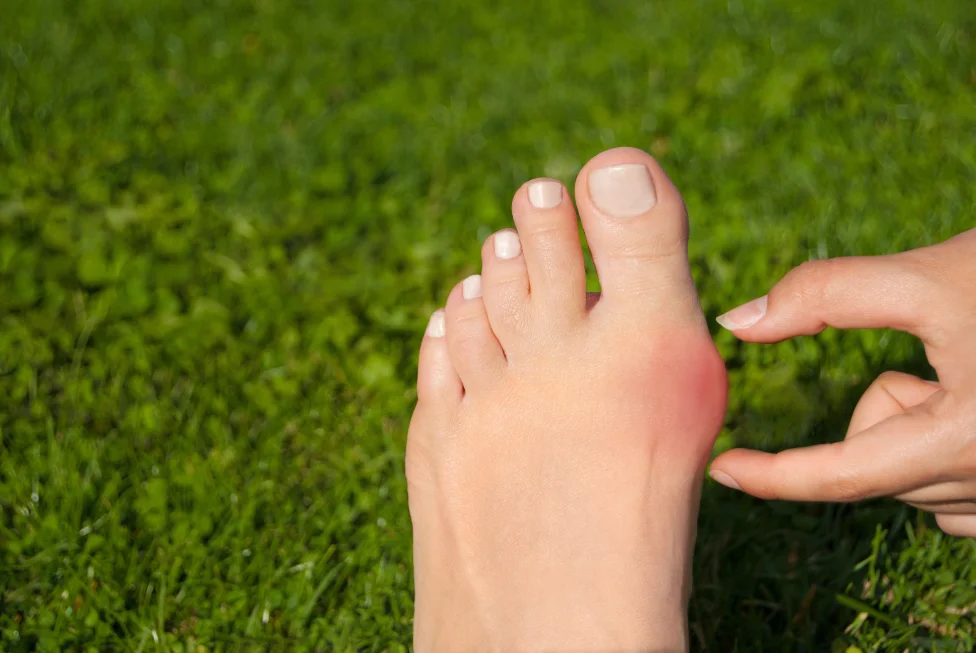
If a bunion is making it hard to wear your shoes, walk without pain, or stay active, you have more options today than you did even a few years ago. Dr. Jay Berenter offers a modern, no-hardware approach to bunion correction that's designed around a smaller incision, a faster recovery, and a more natural-looking result.
For more than 20 years, Dr. Berenter has been an innovator in advanced bunion surgery. He pioneered a No-Hardware Bunionectomy — a technique that corrects painful bunions while avoiding many of the drawbacks that come with traditional bunion surgery. It uses a small incision hidden on the inside of the foot, a dissolving fixation screw, and a recovery plan that often lets you begin walking right away in a protective surgical shoe.
For the right patient, it's a more comfortable, more cosmetic, and more efficient alternative to the way bunions have traditionally been fixed.
What Is a No-Hardware Bunionectomy?
A bunion is more than a bump on the side of your foot. It's a structural problem — the big toe joint drifts out of alignment, which is what leads to the pain, the shoe pressure, the inflammation, and the difficulty walking comfortably.
Traditional bunion surgery usually relies on permanent screws, pins, or plates to hold the corrected bone in place. Dr. Berenter's No-Hardware Bunionectomy works differently. It uses a dissolving fixation screw that supports the bone while it heals, then gradually absorbs over time.
The result: your bunion is corrected, and there's no permanent hardware left behind.
Why Patients Choose Dr. Berenter's Technique
Dr. Berenter developed this approach with your comfort, appearance, and recovery in mind. Here's what sets it apart:
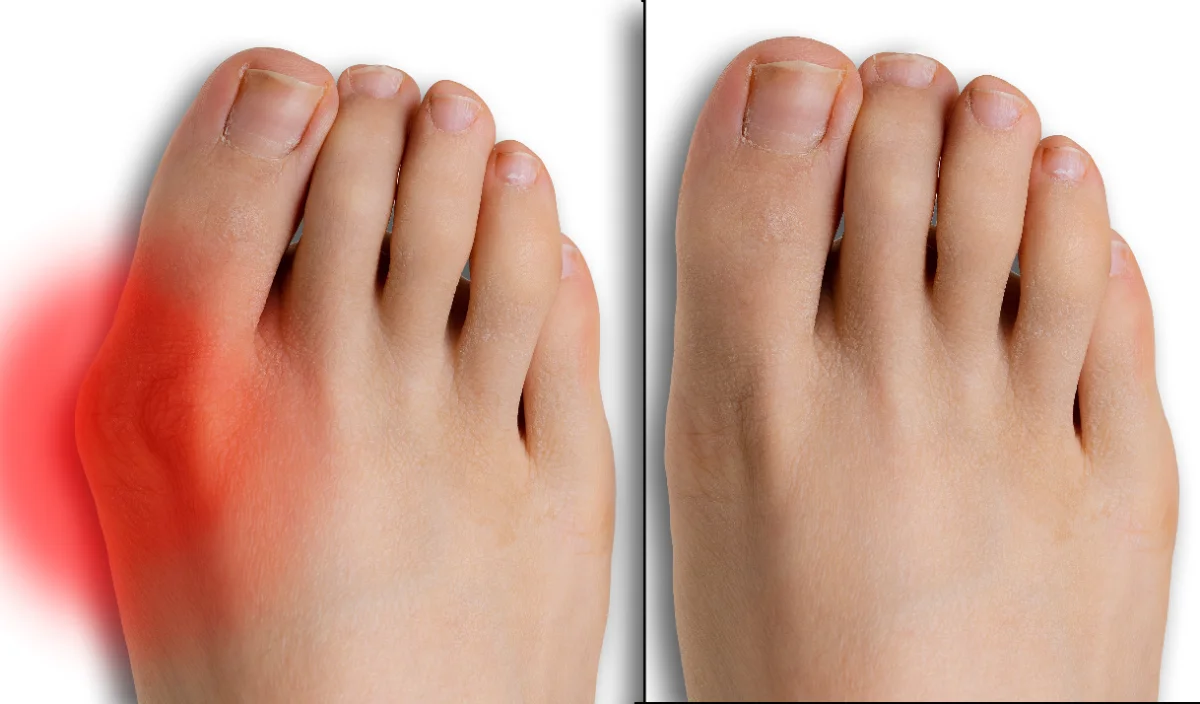
A Small, Hidden Incision
One of the biggest advantages of this technique is where the incision is placed. Dr. Berenter uses a small incision on the inside of the foot, where it's naturally less visible.
The goal isn't only to correct the bunion — it's to preserve a more natural, cosmetic appearance of your foot whenever possible.
Walking Right After Surgery
Many patients are surprised to hear they may not need crutches at all. In appropriate cases, you're allowed to walk immediately after surgery in a protective surgical shoe or boot. That makes recovery far easier and more convenient than traditional procedures, which often require weeks of staying off the foot entirely.
Dr. Berenter will look at your foot structure, bunion severity, bone quality, activity level, and overall health to determine whether this approach is right for you.
No Permanent Hardware — and Why That Matters
Traditional fixation can work, but permanent screws, pins, and plates sometimes cause their own problems: irritation, discomfort, a bump you can feel under the skin, sensitivity, or even a second surgery just to take painful hardware back out.
Because Dr. Berenter's technique uses a dissolving screw, those concerns are largely off the table. The screw does its job while your foot heals, then it's gone — no implant to irritate you later, and no follow-up surgery simply to remove it.
A Short, Convenient Outpatient Procedure
For many patients, the procedure takes about 20 minutes and is done on an outpatient basis. Most cases use IV sedation rather than general anesthesia, so you can go home the same day and start recovering in the comfort of your own home.
Designed for an Easier Recovery
Everyone heals a little differently, but Dr. Berenter built this technique to make recovery as smooth as possible. The goals of the procedure are to:
Is No-Hardware Bunion Surgery Right for You?
This technique may be a good fit if a painful bunion is making it hard to wear shoes, walk comfortably, or stay active. You may be a candidate if you have:
Not every bunion needs surgery, and not every patient is a candidate for the same technique. Dr. Berenter will do a detailed evaluation and review your X-rays before recommending the best option for your specific foot.
Experience Matters
Dr. Jay Berenter has spent more than 35 years treating foot and ankle conditions in San Diego. As an experienced podiatric surgeon and an innovator in bunion correction, he's helped countless patients get back to walking, exercising, and wearing the shoes they want.
His No-Hardware Bunionectomy reflects a career-long commitment to advanced surgical technique, patient comfort, cosmetic results, and personalized care.

Disclaimer: Individual results vary. Surgical recovery depends on the severity of the bunion, bone quality, overall health, activity level, and compliance with post-operative instructions. Dr. Berenter will determine whether a No-Hardware Bunionectomy is appropriate after a complete evaluation and X-ray review. — Jay S. Berenter, DPM, FACFAS
Frequently Asked Questions
Is bunion surgery worth it?
For most patients, surgery is worth considering once a bunion causes daily pain, limits the shoes you can wear, or keeps you from activity you care about — and once non-surgical measures have stopped helping. A bunion is a structural change in the bones of the forefoot, so it will not straighten on its own. Dr. Berenter reviews your exam and weight-bearing X-rays with you and will tell you plainly whether surgery is likely to help in your case.
Can bunions be corrected without surgery?
No. Splints, toe spacers, taping and wider shoes can relieve pressure and slow irritation, and they are often the right first step — but nothing non-surgical repositions the bone. Only surgery corrects the underlying deformity. Many patients manage a mild bunion comfortably for years without an operation.
How long is recovery after bunion surgery?
Recovery depends on the deformity and the correction performed. Because Dr. Berenter’s minimally invasive technique stabilizes the correction without permanent screws or plates, many patients begin protected weight-bearing sooner than with a traditional bunionectomy. Swelling can take several months to fully settle. Dr. Berenter will give you a timeline specific to your foot at your consultation.
Is bunion surgery painful?
The procedure itself is done under anesthesia, so you will not feel it. Discomfort in the first days afterward is normal and is managed with a planned pain-control regimen. Most patients describe the recovery as more limiting than painful.
Is bunion surgery covered by insurance?
Bunion surgery is generally covered when it is medically necessary — that is, when the bunion causes pain or functional problems rather than being a cosmetic concern. Coverage and out-of-pocket cost vary by plan. Our office accepts most major plans and will verify your benefits before you schedule; call 858-455-6460.