
Non-Surgical Neuroma Treatment in San Diego
Advanced ultrasound-guided alcohol injection therapy for Morton's neuroma pain — without surgery.
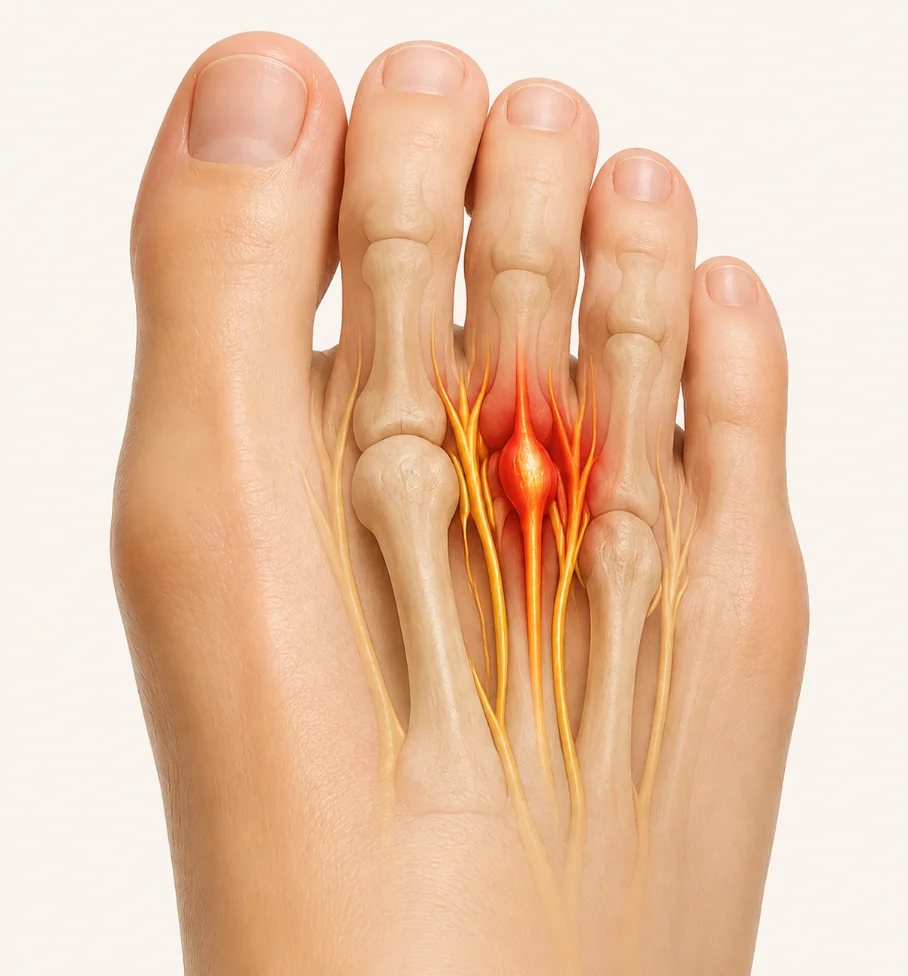
If you have sharp, burning, tingling, or electric-like pain in the ball of your foot, a Morton's neuroma may be the cause. A lot of patients describe it as walking on a pebble, feeling like a sock is bunched up under the foot, or pain that shoots into the toes.
Neuroma pain has a way of taking over. It can make walking, exercising, wearing dress shoes, or even standing for a while genuinely uncomfortable. The good news is that surgery isn't your only option.
Dr. Jay Berenter offers a specialized, non-surgical treatment using a series of Dehydrated Sterile Alcohol injections performed under ultrasound guidance — an approach designed to treat the neuroma itself, not just quiet it down for a while.
A Different Approach Than Steroid Injections
The traditional treatment for a neuroma is usually a cortisone or steroid injection. Steroids may give you temporary relief, but they don't typically address the underlying nerve problem — so the pain tends to come back.
Repeated steroid injections can also carry side effects, including:
Dr. Berenter takes a different route. Instead of relying on repeated steroids for short-term relief, he uses a series of carefully placed Dehydrated Sterile Alcohol injections designed to treat the painful neuroma directly.
What Is Dehydrated Sterile Alcohol Injection Therapy?
Dehydrated Sterile Alcohol injection therapy is a non-surgical technique that reduces or eliminates neuroma pain by targeting the irritated nerve tissue itself.
The treatment is done as a series of small injections placed precisely into the area of the neuroma. Over time, the injections are intended to calm the nerve irritation responsible for the burning, tingling, numbness, and shooting pain that come with a Morton's neuroma.
For the right patient, this can mean avoiding surgery altogether — and getting back to normal walking and activity without the long recovery of surgically removing the nerve.
The Benefits of This Treatment
Most patients walk out of the office right after treatment and go straight back to their day. Here's what sets the approach apart:
Ultrasound-Guided for Precision
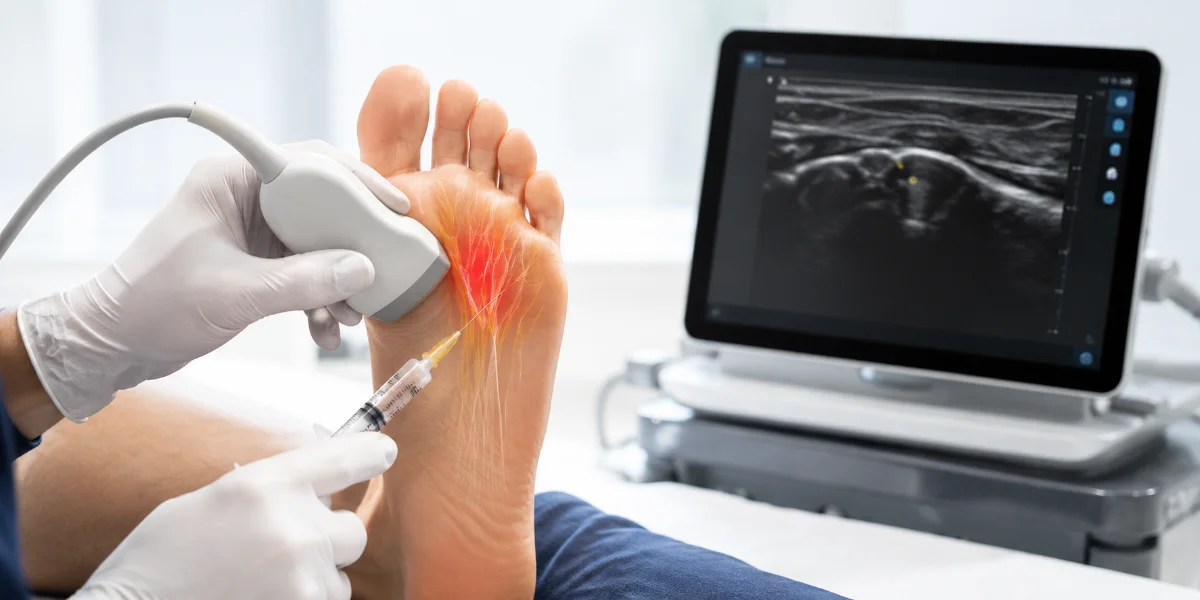
Dr. Berenter performs these injections under ultrasound guidance to help ensure the medication is placed accurately.
Ultrasound lets him see the neuroma and the structures around it during the procedure, which improves precision and gives you the best chance at a successful outcome. That accuracy matters — with neuroma treatment, the injection has to reach exactly the right spot to work as intended.
What to Expect During Treatment
The injection is done in the office. Dr. Berenter uses ultrasound to locate the neuroma and guide the injection into the proper spot.
The treatment itself usually takes only a few minutes. You may feel a brief burning or pressure sensation as the injection is given, but that typically passes quickly.
Because the treatment is done as a series, you'll usually come back for follow-up injections until the pain has significantly improved or resolved.
Experience Matters
Dr. Jay Berenter has used Dehydrated Sterile Alcohol injection therapy for neuroma pain for more than 20 years, and he's been one of the leading users of this technique.
In his clinical experience and study of the technique, roughly 85% or more of appropriately selected patients have seen significant improvement or full resolution of their neuroma pain.
That depth of experience also means he can tell you honestly whether you're a good candidate for alcohol injection therapy — or whether another treatment would serve you better.
Is This Treatment Right for You?
You may be a candidate for ultrasound-guided Dehydrated Sterile Alcohol injection therapy if you have:
Keep in mind that not all forefoot pain is a neuroma. Dr. Berenter will perform a careful examination — and may use imaging or diagnostic testing when appropriate — to confirm the diagnosis and recommend the right treatment plan for you.
A Non-Surgical Option Before You Consider Surgery
Neuroma surgery can be effective, but it comes with real trade-offs: downtime, incision healing, scar tissue, numbness, and recovery restrictions.
For many patients, Dr. Berenter's ultrasound-guided alcohol injection therapy offers an effective non-surgical alternative to try first. The goal is simple — reduce or resolve your neuroma pain and get you back to walking, exercising, and wearing your shoes comfortably.

Disclaimer: Individual results vary. No treatment can guarantee a cure. Clinical outcome depends on the size and location of the neuroma, duration of symptoms, foot structure, shoe wear, activity level, and other medical factors. Dr. Berenter will determine whether Dehydrated Sterile Alcohol injection therapy is appropriate after a complete evaluation. — Jay S. Berenter, DPM, FACFAS
Frequently Asked Questions
What does Morton's neuroma feel like?
Most people describe burning or sharp pain in the ball of the foot, often between the third and fourth toes, sometimes with numbness or tingling in the toes. A common description is the sensation of standing on a pebble or of a sock bunched under the foot. Symptoms typically worsen in tight or narrow shoes and ease when you take the shoe off.
Can Morton's neuroma go away without surgery?
Often, yes. Many patients improve with footwear changes, metatarsal padding, custom orthotics, and ultrasound-guided injections. Dr. Berenter starts with the least invasive option that fits your case and reserves surgery for neuromas that do not respond to conservative care.
When is Morton's neuroma surgery necessary?
Surgery is considered when conservative treatment has been given a fair trial and pain still limits daily activity. Dr. Berenter will confirm the diagnosis — usually with an in-office exam and ultrasound — before recommending any procedure.
How is the diagnosis confirmed?
By clinical examination, supported by ultrasound imaging when needed. Ultrasound lets Dr. Berenter see the neuroma directly, which also allows injections to be placed precisely rather than by feel.