
Toenail Fungus Treatment in San Diego
An effective topical approach to fungal toenails — designed to avoid the side effects that come with oral antifungal medication.
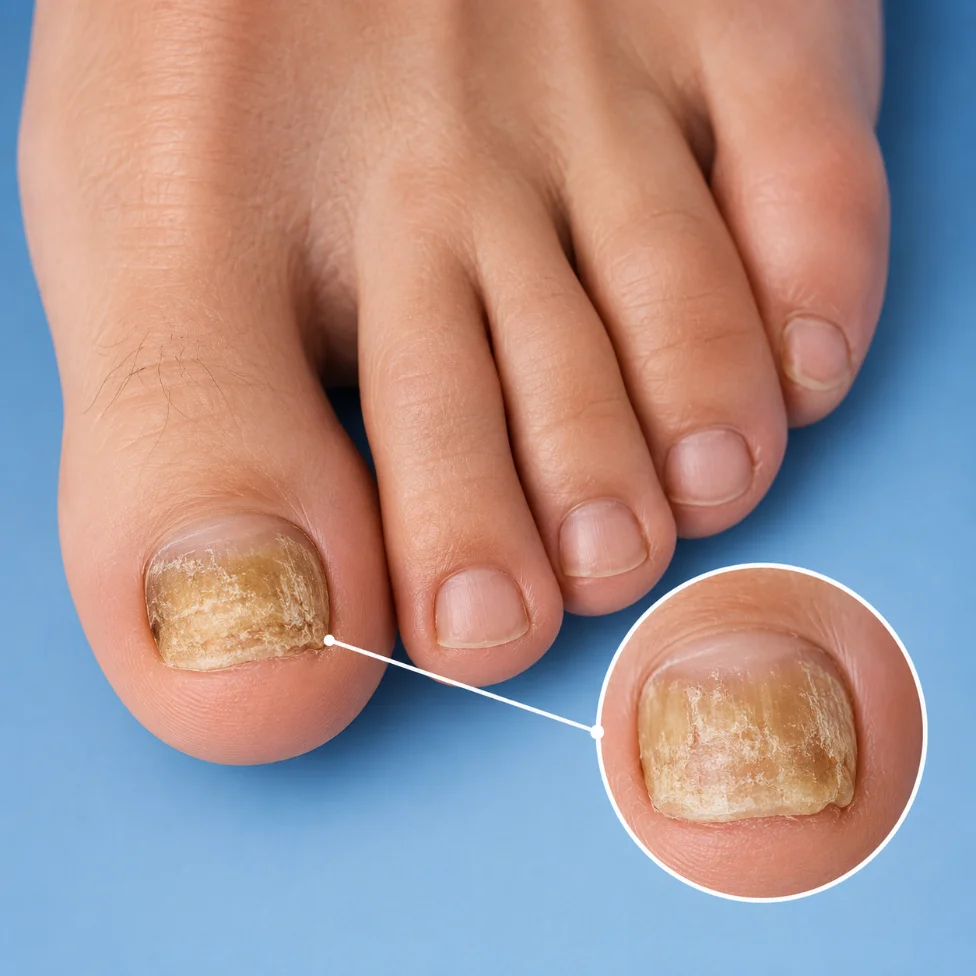
Thick, yellowed, crumbling toenails aren't just a cosmetic annoyance. Toenail fungus is a genuine infection, it's stubborn, and it rarely clears up on its own or with drugstore products. Left alone, it tends to spread and get worse.
Dr. Jay Berenter treats fungal toenails with a topical approach he developed over years of clinical practice — one built to get results while avoiding the potential side effects and monitoring that come with oral antifungal pills.
What Is Toenail Fungus?
Toenail fungus, known medically as onychomycosis, is a fungal infection that takes hold in and under the toenail. Once it settles into the nail, it's protected by the very thing it's infecting — which is a big part of why it's so hard to get rid of.
It often starts small, as a spot of discoloration, and spreads gradually across the nail — and sometimes to neighboring nails — over time.
Signs You May Have Toenail Fungus
Common symptoms include:

Why Toenail Fungus Is So Hard to Beat
If you've tried an over-the-counter remedy and watched it fail, you're far from alone. A few things make this infection especially stubborn:
That's why an off-the-shelf product often isn't enough, and why a treatment approach matters.
What Causes It — and Who's at Risk
Fungal nail infections are common, and several factors make them more likely:
Dr. Berenter's Topical Approach
Toenail fungus is often treated with oral antifungal medication. Those pills can work — but they can also require blood-test monitoring, interact with other medications, and aren't the right choice for every patient.
Dr. Berenter developed a topical treatment for fungal toenails specifically to offer an effective option while avoiding those systemic side effects. It's applied directly to the affected nails, targeting the infection without asking the rest of your body to process an oral medication.
Because everyone's situation is different, Dr. Berenter will evaluate your nails, confirm the diagnosis, and recommend the approach best suited to you — including realistic expectations for how long clearance will take as the healthy nail grows in.
Getting the Diagnosis Right
Here's something a lot of patients don't realize: not every thick or discolored toenail is actually fungal. Nail trauma, psoriasis, and other conditions can look very similar — and treating the wrong problem wastes time and money.
Dr. Berenter will examine the nail carefully and, when appropriate, confirm whether fungus is truly the cause before recommending treatment. Getting the diagnosis right is the first step toward getting real results.
Is It Time to Have Your Toenails Evaluated?
Consider scheduling an evaluation if you have:
Experience Matters
Dr. Jay Berenter has spent more than 35 years caring for feet in San Diego. As a board-certified foot and ankle surgeon, he treats fungal toenails with the same principles that guide the rest of his practice: an accurate diagnosis first, an approach designed to minimize side effects, and a treatment plan built around you as an individual.

Disclaimer: Individual results vary. No treatment can guarantee clearance of a fungal nail infection. Outcomes depend on the severity and duration of the infection, nail growth, overall health, and other medical factors. Dr. Berenter will determine the most appropriate treatment plan after a complete evaluation. — Jay S. Berenter, DPM, FACFAS
Frequently Asked Questions
How do I know if my toenail has a fungal infection?
Fungal nails are usually thickened, yellow or brown, and brittle or crumbling at the edge, and they may lift away from the nail bed. Not every discolored nail is fungal — trauma, psoriasis and other conditions look similar. Dr. Berenter can confirm the diagnosis, sometimes with a nail sample, before treating.
What treatments are available for toenail fungus?
Options include topical antifungal medications, oral antifungal medication, laser therapy, and debridement to thin the nail. The right choice depends on how much of the nail is involved, how many nails are affected, and your medical history. Dr. Berenter will walk you through what is appropriate for you.
How long does it take for a fungal toenail to clear?
Slowly — because you are waiting for a healthy nail to grow out. A toenail takes roughly nine to twelve months to fully replace itself, so visible improvement is gradual regardless of which treatment is used. Consistency matters more than speed.
Will toenail fungus come back?
It can. Reinfection is common when the source is not addressed, so treatment usually includes practical steps: disinfecting or replacing footwear, keeping feet dry, and treating athlete’s foot if it is present.